

tank vs tankless ro filters
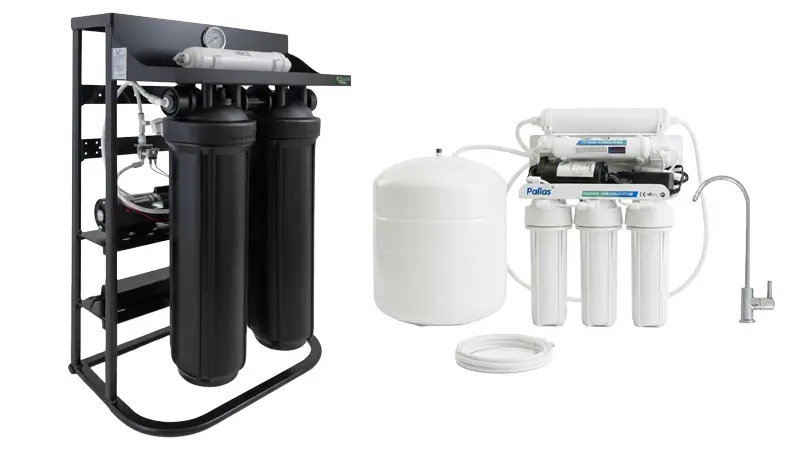
Tank vs Tankless Reverse Osmosis Systems
Tank and tankless RO systems both purify water effectively, but they do so in very different ways.
This guide will help break it down, so you can decide whether a tank or tankless RO system is going to suit your household best.
Choosing the right reverse osmosis (RO) system can noticeably improve your water quality, streamline your kitchen routine, and help lower your monthly bills.
Key Points
- Both tank and tankless RO systems remove up to 99% of contaminants; the difference is how they store and deliver the purified water.
- Tank systems store filtered water ready to use, giving faster flow at the tap and better performance during peak, multi-person use.
- Tankless systems filter on demand, so the water is always fresh, the unit is far more compact, and there’s less risk of stagnation.
- Tank RO is generally cheaper upfront and can run with little or no electricity; tankless RO costs more and usually needs power for its pump.
- Tankless systems are typically more water-efficient, while tank systems waste more through refilling and pressurisation cycles.
- Choose tank for a busy household on a budget; choose tankless for small kitchens, fresher water, and a modern setup.
Table of contents
What is Reverse Osmosis and How does it Work?
Reverse osmosis (RO) is a powerful water filtration method that has many benefits such as removing up to 99% of contaminants thereby producing clean and safe water that tastes and smells good.
How it works: As water moves through a semi-permeable membrane, it leaves behind impurities like chlorine, lead, and bacteria. What comes out the other side is clean, great-tasting water straight from your tap.
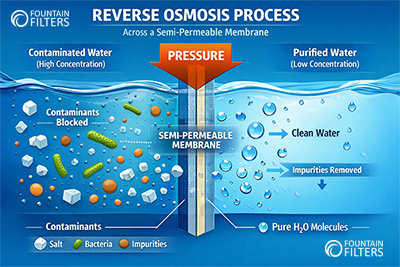
Reverse osmosis systems are ideal for producing exceptionally clean, great-tasting water by reducing dissolved salts, heavy metals, fluoride, nitrates, PFAS, and other contaminants that other filters may not be able to handle. They’re commonly used for drinking and cooking, improving the flavour of drinks, supporting sensitive aquariums, and providing high-purity water for labs and industrial applications.
RO is especially useful in areas with hard or salty water or when treating well water with elevated minerals or chemicals.
Overall, RO is a powerful solution whenever high-quality, highly purified water is the goal.
Tank‑based reverse osmosis (RO) explained
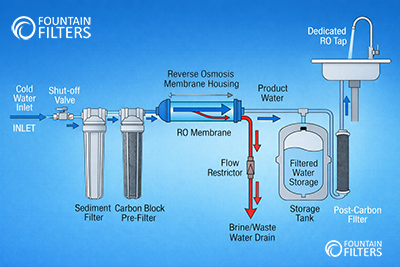
A tank-based reverse osmosis system is a reverse osmosis water filter that stores the purified water in a small RO tank so it’s ready to use whenever you need it.
Because filtering is slow, the reverse osmosis storage tank fills up gradually, then supplies clean water quickly when you turn on the tap.
In simple terms, it’s an RO system that filters water, saves it in a tank, and gives you purified water on demand.
Advantages of storage tank RO systems
RO storage tank systems offer reliable access to purified water by filtering it slowly and storing it until you need it. This ensures strong flow at the tap and consistent water quality, making them ideal for homes with varying water-use patterns.
Key benefits include:
- Faster access to clean water: the tank provides immediate, steady flow rather than waiting for slow RO production.
- Better performance during peak use: multiple people can run water at once without significant pressure drops.
- Stable water quality: treated water is stored and ready, even if the incoming water pressure fluctuates.
- Longer membrane life: the system filters in cycles rather than constantly, reducing wear and tear.
- Quiet, efficient operation: the tank fills gradually, so the system runs less often and is less noisy.
- Ideal for drinking, cooking, and small appliances: ensuring purified water is always available on demand.
Disadvantages of storage tank RO systems
While storage tank RO (Reverse Osmosis) systems are widely used for providing purified water, they come with certain limitations that people should be aware of. These disadvantages can affect water quality, system efficiency, and maintenance requirements.
The key disadvantages include:
- Potential for contamination: insufficient maintenance of the RO system tank may lead to the accumulation of impurities and sediments.
- Restricted water supply: the amount of water available is determined by the size of the reverse osmosis tank, and high usage can cause shortages.
- Space requirement: the reverse osmosis storage tank necessitates additional space, which may present challenges in more compact environments.
- Bacterial growth: stagnant tank water can breed bacteria if left unused for long periods.
- Maintenance: regular cleaning and filter changes are needed for the RO unit and storage tank to operate safely and efficiently.
Tankless reverse osmosis systems explained
Tankless reverse osmosis (RO) systems are a modern twist on traditional water purifiers. Instead of storing filtered water in a tank, these systems deliver clean, fresh water on demand, straight from your tap. This means no waiting for the tank to fill, no bulky storage taking up space, and less risk of water sitting around and getting stale.
Tankless RO systems are all about convenience, efficiency, and always having high-quality drinking water whenever you need it.
Now that we know what tankless RO systems are and how they work, it’s easy to see why they’ve become so popular. Their on-demand design not only saves space but also offers several practical benefits that make daily life more convenient and efficient. Let’s take a closer look at the key advantages of choosing a tankless reverse osmosis system.

Advantages of tankless RO systems
Tankless reverse osmosis (RO) systems offer a range of benefits that make them an appealing choice for households and businesses alike. By providing purified water on demand, they combine convenience, efficiency, and improved water quality, all while reducing the limitations associated with traditional tank-based RO systems. From space-saving designs to fresher, safer water, these systems deliver practical advantages that enhance everyday life.
Here’s a concise bullet-point list of the main advantages of tankless RO systems:
- On-demand water supply: instantly delivers purified water without tank wait time.
- Space-efficient design: removes the requirement for large storage tanks, thereby optimising available kitchen or utility room space.
- Fresher water: lowers stagnation risk for improved taste and safety.
- Energy efficiency: water runs as needed, often using less energy than tank RO systems.
- Low maintenance: with fewer parts, upkeep and cleaning are simpler.
- Continuous flow: allows for greater water consumption during busy times without depleting the supply.
While tankless RO systems offer numerous advantages, no water purification solution is completely without drawbacks. Understanding the potential limitations can help users make informed choices and ensure they get the most out of their system.
Let’s take a closer look at some of the disadvantages of tankless RO systems.
Drawbacks of tankless RO systems
Below is a succinct bullet-point summary of typical drawbacks associated with tankless RO systems:
- Higher upfront cost: Tankless systems usually cost more than standard tank RO units.
- Lower flow rate: On-demand water can be slower than tank models.
- Water pressure required: Low pressure reduces performance.
- Regular filter changes: Filters need frequent replacement.
- Complex installation: Installation may require professionals, increasing costs.
Comparing space requirements, flow speed and water waste
Understanding the differences between tank and tankless RO systems can help you pick the right option. Key factors include space requirements, water delivery speed, and filtration waste. The table below highlights these aspects for easy comparison.
|
Feature |
Tank RO System |
Tankless RO System |
|
Space requirement |
Requires a storage tank, taking up more under sink space. |
Smaller design with no tank, ideal where space is tight. |
|
Flow speed |
Faster flow once tank full |
Flow speed depends on real-time filtration and may be slower on some models. |
|
Water freshness |
Stored in tank |
Always freshly filtered |
|
Water waste |
Higher due to tank refilling and pressurisation cycles. |
More efficient and designed to reduce waste water. |
Top Tip: If space is tight, tankless RO systems win. But if your household needs fast flow for multiple uses, a tank RO system may be better.
Comparing cost, power use and upkeep
Beyond performance and water delivery, the long-term practicality of an RO system often comes down to cost, energy usage, and ongoing maintenance. These factors can vary significantly between traditional tank systems and modern tankless models, influencing not only the upfront investment but also the long-term operating expenses.
The table below compares these key considerations to help you determine which option offers the best value for your needs.
|
Feature |
Tank RO System |
Tankless RO System |
|
Cost |
Lower upfront cost, generally more affordable |
Higher initial cost due to advanced technology. |
|
Power use |
Some models use minimal or no electricity, depending on design. |
Typically requires power for pumps and on-demand filtration. |
|
Upkeep |
More components (including the tank) may require cleaning and maintenance. |
Fewer parts and generally simpler, but filters may need more frequent replacement. |
Top Tip: Even though tankless systems cost more upfront, they can save space and offer cleaner water on demand, which may be worth the investment.
Which system fits your household needs
Choosing the right RO system often depends on your specific needs and lifestyle. Factors such as available space, daily water consumption, preference for fresh water, and budget can all influence which system is the best fit.
The table below highlights which type of RO system, tank or tankless, is better suited for common scenarios, helping you make an informed decision.
|
Scenario |
Recommended System |
Why |
|
Small kitchens/limited space |
Tankless RO |
Compact, no bulky tank, saves valuable space. |
|
High daily water usage |
Tank RO |
Stored purified water provides higher instant flow and meets peak demand without stressing the unit. |
|
Focus on freshest water |
Tankless RO |
Produces water on demand, minimising stagnant storage and reducing taste/contamination risk. |
|
Budget friendly choice |
Tank RO |
Generally lower upfront cost and simpler technology. Often cheaper to buy and install. |
Comparison summary
Selecting between a tank and a tankless RO system can be a complex process; however, understanding the primary distinctions between the two options enables you to identify which system aligns best with your requirements. Considerations such as spatial constraints, water flow rate, and maintenance obligations each present distinct advantages and limitations for both systems.
The table below presents a straightforward, side-by-side comparison to facilitate an informed decision.
|
Feature |
Tank RO System |
Tankless RO System |
|
Space Requirements |
Requires a storage tank, takes up more under-sink or utility room space. |
Compact, no tank needed, ideal for small spaces. |
|
Water Flow |
Faster flow from stored water, good for peak usage. |
Flow depends on filtration rate, may be slower during high demand. |
|
Water Freshness |
Water can sit in the tank, may risk stagnation. |
Produces water on demand, always fresh. |
|
Water Waste |
Higher waste due to tank refilling and pressurisation cycles. |
More efficient, designed to reduce wastewater. |
|
Upfront Cost |
Lower purchase cost. |
Higher initial cost due to advanced technology. |
|
Maintenance |
Tank and filters require regular upkeep. |
Simpler system but filters may need frequent replacement. |
|
Best For |
Budget conscious users, high daily water use. |
Small spaces, focus on freshest water, modern homes. |
Quick Takeaway:
- If you want fast water for a busy family and a lower initial cost, go tank based.
- If space is limited, water freshness is your priority, and you don’t mind paying more, go tankless.
If you’re ready to upgrade your water purification system and explore a wide range of high quality reverse osmosis systems and replacement cartridge sets, then call us on 01352838281 or send us a message via our helpdesk.
We’ll help you find the perfect reverse osmosis system for your home or business.
FAQs
Is tank or tankless RO better?
It depends on your needs. Tank RO suits high water usage and lower budgets; Tankless RO fits small spaces and provides fresh water instantly.
What is the most effective reverse osmosis system?
That depends on your priorities, but generally, a multi‑stage RO system (5‑ or 6‑stage) with quality filters and a high recovery rate is the most effective, offering the best balance of purity, flow, and long‑term performance.
How long do RO tanks last?
RO tanks typically last 5–10 years with proper maintenance and regular cleaning.
Do RO systems increase your water bill?
Yes, to some extent reverse osmosis systems utilise additional water during the filtration process, which may result in a modest increase in your water bill.
What size RO tank do I need for my house?
For most homes, a 10–15 litre RO tank is usually enough, while larger households may prefer a 15–20 litre tank to meet higher daily water demand.
About the author

Louise Allen is a partner at Fountain Filters, where she's helped run the business since 2011. Alongside the day-to-day order management, despatch, and quality, she's built up a practical, hands-on knowledge of water filtration, and reviews the site's articles to keep the advice accurate and genuinely useful. Outside work, she's run the London Marathon with business partner Simon.
