

Home / Carbon Water Filters / Oyster Triple Water Purifier
Oyster Triple Water Purifier

Overview | Is this right for me? | What it reduces | How it works | Specs | What's included | Installation | Maintenance & costs | FAQs | Reviews
- Home Water Purification - the ultimate guide to water purification.
- How to Remove Fluoride in Water in the UK - the different ways to reduce fluoride and which suits your home.
Overview
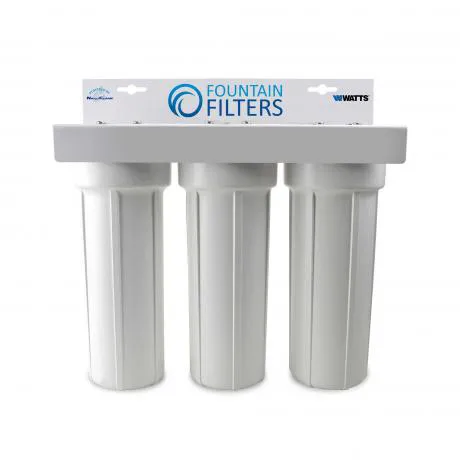
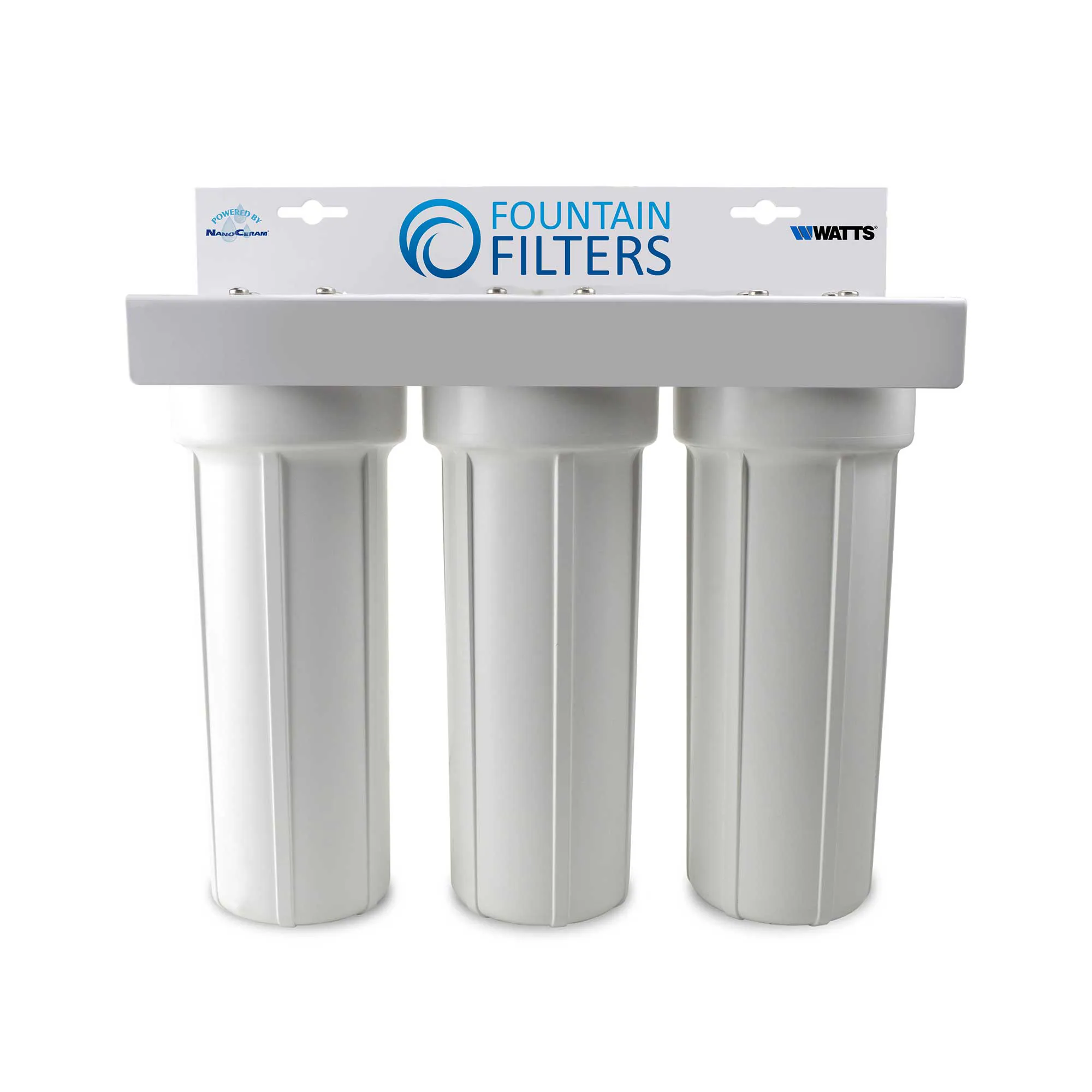
The Oyster Triple Water Purifier is a comprehensive three-stage undersink drinking water system for people who want to reduce fluoride as well as a broad range of chemicals, heavy metals and microorganisms. It combines dedicated fluoride filtration with chemical and heavy metal reduction and a final 0.2 micron NanoCeram purification stage, while retaining naturally occurring minerals such as calcium and magnesium.
- Dedicated fluoride reduction stage reduces fluoride by around 93%, depending on water conditions.
- Three-stage purification targeting fluoride, chlorine, chemicals, heavy metals, bacteria, viruses, cysts and fine particulates.
- Retains naturally occurring minerals such as calcium and magnesium rather than removing dissolved mineral salts.
- No waste water or electricity required, with purified drinking water delivered through its own dedicated outlet.
- Compact undersink design measuring just 36cm wide x 34cm high x 13cm deep.
Is tap water safe to drink? - Tap water may meet the standards, but does it meet your standards? Discover the difference for yourself.
Is this right for me?
Choose this if
You want comprehensive purification of your drinking water and specifically want to reduce fluoride. The Oyster Triple is ideal if you're looking for an undersink system that also targets chlorine, chemicals, heavy metals and microorganisms while retaining naturally occurring minerals such as calcium and magnesium.
It's also a strong choice if you're considering reverse osmosis but would prefer a system with no wastewater, no electricity and no storage tank.
Not ideal if
You don't need fluoride reduction, in which case the Oyster Water Purifier provides broad chemical and microorganism reduction with one less filtration stage.
It's also not suitable if you specifically want to remove dissolved salts or hardness minerals, where reverse osmosis may be more appropriate, or if you want purified water supplied throughout your entire home rather than from a dedicated drinking water outlet.
What to check before buying
- Available space: Allow at least W 36cm x H 34cm x D 13cm, plus sufficient room underneath to remove the filter housings when changing cartridges.
- Tap option: Choose one of our drinking water taps, or select 'no tap' if you already have one or plan to use a 3 way kitchen tap.
- Supply fitting: Choose between a 15mm compression valve or self-piercing saddle valve, or supply your own fitting.
- Cartridge replacement: The system uses three cartridges, typically replaced approximately once every 12 months, depending on water quality and usage.
- Fluoride reduction: The dedicated activated alumina cartridge reduces fluoride by around 93%, with actual performance depending on factors including water chemistry, flow rate and usage.
Tap Water Contaminants Explained - learn about the most common types of drinking water contaminants.
What it reduces and what it doesn't
The Oyster Triple Water Purifier uses three different filtration technologies, with each cartridge targeting a different group of contaminants. Together they provide broad drinking water purification, including dedicated fluoride reduction, while retaining naturally occurring dissolved minerals such as calcium and magnesium.
The Oyster Triple reduces:
The Oyster Triple doesn't reduce:
Let's compare it against reverse osmosis while we're at it:
| Oyster Triple Water Purifier | |||
| Contaminant / Substance | Reduced? | Main filtration stage | |
|---|---|---|---|
| Fluoride | ✔ Around 93% | Activated alumina | |
| Chlorine | ✔ Yes | Carbon | |
| Taste & odour | ✔ Improves | Carbon | |
| VOCs & chemical contaminants | ✔ Reduces many | Carbon | |
| PFAS / PFOS | ✔ Reduces | Carbon / NanoCeram | |
| Heavy metals | ✔ Reduces | Carbon / NanoCeram | |
| Bacteria | ✔ Yes | NanoCeram | |
| Viruses | ✔ Yes | NanoCeram | |
| Cysts | ✔ Yes | NanoCeram | |
| Fine particulates & colloids | ✔ Yes | NanoCeram | |
| Trace pharmaceuticals | ✔ Reduces | Carbon / NanoCeram | |
| Limescale & water hardness | ✖ No | - | |
| Dissolved mineral salts | ✖ No | - | |
Actual reduction performance depends on water chemistry, flow rate, contaminant concentration, cartridge condition and usage.
How it works
The Oyster Triple purifies your drinking water in three stages, with each cartridge targeting a different group of contaminants. Water passes through the cartridges in sequence before being delivered to your dedicated drinking water tap.
Stage 1 - Fluoride reduction
The first stage uses an activated alumina cartridge specifically for fluoride reduction. It reduces fluoride by around 93%, depending on water chemistry, flow rate and usage, and also helps reduce arsenic.
Stage 2 - chemicals and heavy metals.
Next the water passes through a GAC/KDF cartridge. Activated carbon reduces chlorine, taste and odour and a wide range of chemical contaminants, while KDF media provides additional reduction of heavy metals such as lead, mercury and arsenic.
This stage also targets contaminants including VOCs, PAHs and endocrine disrupting chemicals.
Stage 3 - NanoCeram purification.
The final stage uses an Argonide NanoCeram 0.2 micron electropositive filter. Rather than relying on pore size alone, its electropositive media attracts and captures extremely fine negatively charged contaminants as the water passes through.
The final purification stage helps reduce bacteria, viruses, cysts, colloids, fine particulates and other microscopic contaminants before the water reaches your drinking water tap.
The three stages work together to provide broad contaminant reduction while allowing naturally occurring dissolved minerals such as calcium and magnesium to remain in the water.
Specifications
| Specification | Details |
| Filtration stages | Three |
| Stage 1 | Activated alumina fluoride cartridge |
| Stage 2 | GAC/KDF carbon cartridge |
| Stage 3 | Argonide NanoCeram® electropositive cartridge |
| NanoCeram® rating | 0.2 micron |
| Fluoride reduction* | Around 93% |
| Dimensions | W 36cm x H 34cm x D 13cm |
| Installation | Undersink, on the cold water supply |
| Water outlet | Dedicated drinking water tap or compatible 3 way kitchen tap |
| Supply connection | 15mm compression valve or self-piercing saddle valve |
| Wastewater | None |
| Electricity required | None |
| Storage tank required | No |
| Minerals retained | Naturally occurring dissolved minerals including calcium and magnesium |
| Cartridge replacement | Typically every 12 months, depending on water quality and usage |
| Working conditions | Indoor residential use |
*Fluoride reduction depends on local water chemistry, flow rate, fluoride concentration, cartridge condition and usage.
What's included
Everything needed for the filtration system is supplied, with a choice of drinking water tap and water connection to suit your installation.
- 1 x activated alumina fluoride reduction cartridge
- 1 x GAC/KDF cartridge for chlorine, chemicals and heavy metals
- 1 x Argonide NanoCeram® 0.2 micron purification cartridge
- Choice of drinking water filter tap, or 'no tap' option if you already have one or plan to use a 3 way kitchen tap
- Choice of 15mm compression valve or self-piercing saddle valve, or supply your own connection
Installation & placement
The Oyster Triple is installed under your kitchen sink on the cold water supply, with purified drinking water delivered through a dedicated filter tap or compatible 3 way kitchen tap. It requires no electricity, storage tank or drain connection.
Allow a minimum of W 36cm x H 34cm x D 13cm, plus sufficient space beneath the housings to remove them when replacing the cartridges.
The three cartridges must be installed in the correct sequence:
- Stage 1 - Activated alumina fluoride cartridge
- Stage 2 - GAC/KDF cartridge
- Stage 3 - Argonide NanoCeram® 0.2 micron cartridge
This ensures the water passes through fluoride reduction and chemical filtration before reaching the final NanoCeram® purification stage.
Full fitting instructions are supplied and can be downloaded from the product page. Once installed, routine cartridge changes are straightforward to carry out yourself.
Maintenance & running costs
The Oyster Triple is designed to be straightforward to maintain. The three filter cartridges are typically replaced around once every 12 months, although replacement frequency will depend on your water quality and how much filtered water your household uses.
Once the system has been installed, changing the cartridges is a job you can normally do yourself, so there's no need to call a plumber for routine maintenance.
All three replacement cartridges are available together as an Oyster Triple replacement cartridge set, making it easy to replace the complete set at the same time.
There are no electricity or wastewater costs, so the main ongoing cost is simply replacing the filter cartridges.
FAQs
How much fluoride does the Oyster Triple Water Purifier reduce?
The dedicated activated alumina cartridge reduces around 93% of fluoride. Actual performance can vary depending on water chemistry, fluoride concentration, flow rate, cartridge condition and usage.
Does the Oyster Triple reduce bacteria and viruses?
Yes. The final Argonide NanoCeram 0.2 micron electropositive filter is designed to reduce bacteria, viruses and cysts, as well as very fine particulates and colloids. This provides a level of microbiological filtration that a standard carbon drinking water filter alone does not offer.
Does the Oyster Triple remove limescale or soften water?
No. The Oyster Triple is a drinking water purifier, not a water softener. It retains naturally occurring dissolved minerals such as calcium and magnesium, so it will not prevent limescale around your home. If reducing hardness and limescale is your main priority, a water softener or limescale treatment system would be more suitable.
How often do I need to replace the Oyster Triple cartridges?
The three cartridges are typically replaced around once every 12 months, although this depends on your water quality and how much filtered water your household uses. Replacement cartridges are available as a complete set and are straightforward to change once the system has been installed.
Can I install the Oyster Triple Water Purifier myself?
Yes, if you're comfortable with basic plumbing. The system fits under the kitchen sink on the cold water supply and requires no electricity or drain connection. Fitting instructions are supplied, and you can choose a suitable water connection when ordering. If you're not confident working with your water supply, we recommend using a competent plumber.
* Occasionally Watts components may be replaced with other high quality items as a result of unexpected supply chain issues. This does not affect the quality of the product or its function. Brassware and other plumbing accessories are sourced from UK suppliers.
Reviews
Discover More
Explore products from other categories
Need Assistance?
We're here to help! Our dedicated helpline is ready to answer your questions and provide solutions.

Allen & Allen t/a Fountain Filters,
Strowger House, Sandy Lane Ind. Est.
Newcastle upon Tyne, NE3 5HE, UK.
https://w3w.co/pipes.ranked.dates
VAT Reg: 370859370